Why Your Girls' Night Outfit Looks Amazing in the Mirror and Flat in Photos

Quick Answer: Warm, low venue lighting and phone camera white balance flatten fine details and mute certain colors — especially pastels and busy prints — that look great in daylight or bathroom mirror lighting. Solid, saturated colors and a bit of shine or texture photograph more reliably than flat matte fabric in dim rooms.
You tried on three outfits before leaving, picked the one that looked best in your bedroom mirror, and then the group photos from the actual night look washed out or muddy. This isn’t bad luck — it’s a predictable mismatch between home lighting and venue lighting.
Why does home mirror lighting lie to you?
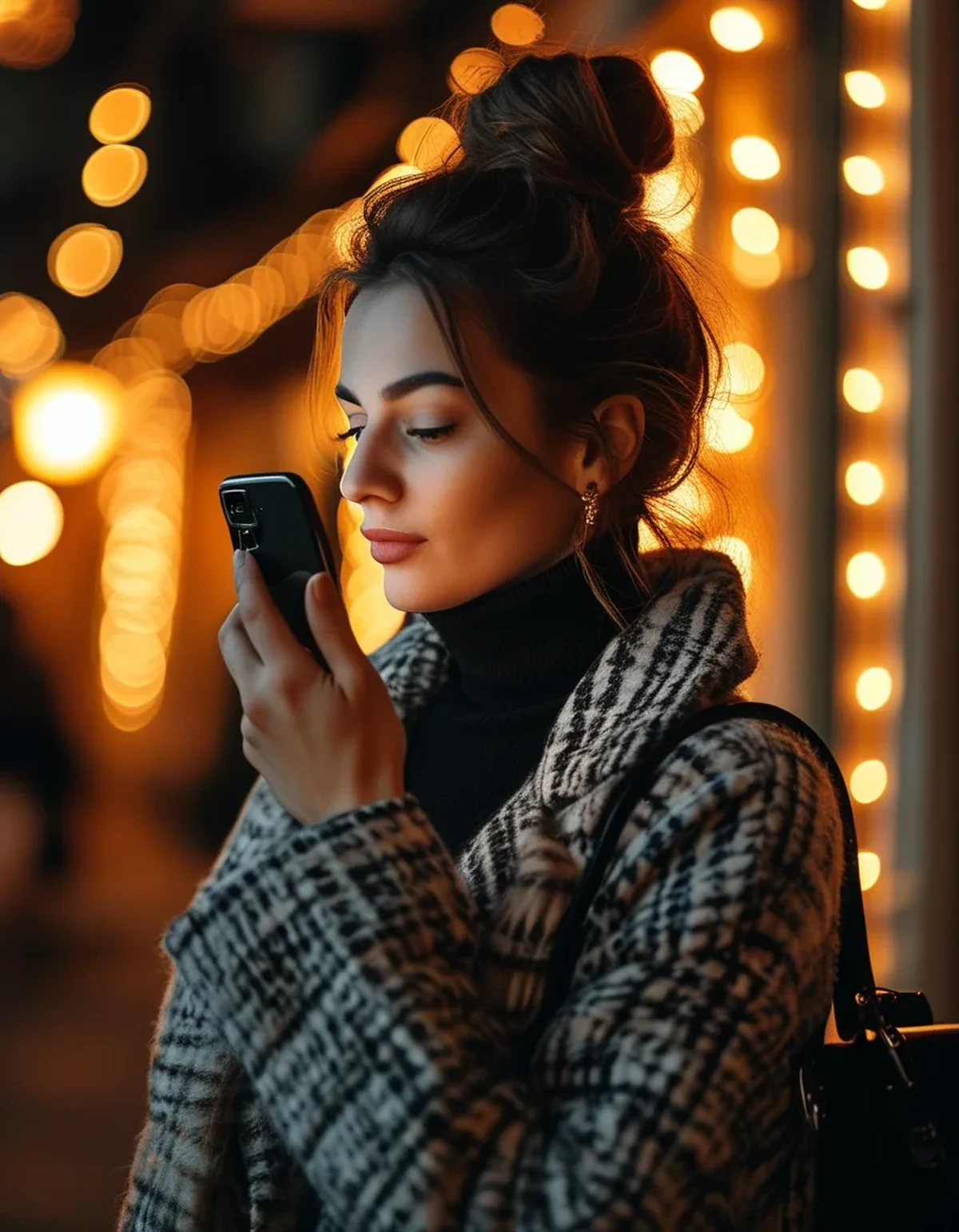
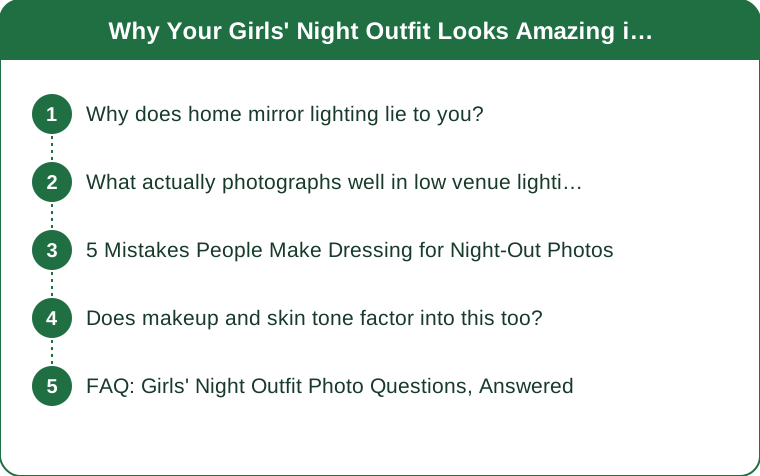
Most bedrooms and bathrooms use bright, relatively neutral white light, sometimes with natural window light mixed in. Venues — bars, restaurants, clubs — use warm, low, often colored ambient lighting specifically because it’s flattering to skin tones in person, but that same warm cast shifts how your camera reads color, pulling blues toward gray and washing out pale pastels.
Your eyes adjust to the warm light in real time and still perceive the outfit’s true colors reasonably well. A camera sensor doesn’t adjust the same way, which is why the in-person look and the photo can diverge so much.
What actually photographs well in low venue lighting?
Saturated, solid colors — deep red, emerald, cobalt, black — hold their color identity under warm dim light far better than pastels or pale neutrals, which tend to flatten toward beige or gray in photos. A bit of texture or subtle shine (satin, sequins, a metallic thread) catches available light and adds visible dimension that flat matte fabric loses entirely in low light.
Busy small prints are the biggest risk — from a few feet away in dim lighting, a fine print can photograph as a muddy blur rather than a distinct pattern, even though it reads clearly in daylight.
5 Mistakes People Make Dressing for Night-Out Photos
1. Trusting only the bedroom mirror. Check your outfit under a warm lamp with the overhead light off before you leave — it’s the closest home approximation of venue lighting.
2. Picking an all-pastel outfit for a dark venue. Pastels need bright, even light to read; they’re the first thing to wash out in a dim room.
3. Skipping any reflective element. Zero shine anywhere on the outfit means zero highlight for the camera to catch — even a metallic clutch or earrings adds a photo anchor point.
4. Forgetting flash changes everything again. If the group takes flash photos later in the night, colors render differently again than in ambient light — a color that’s safe in both conditions (not neon-reactive, not ultra-pale) is the safest bet.
5. Ignoring the venue’s actual lighting color. A quick look at the venue’s Instagram photos beforehand tells you if it leans warm amber, cool blue, or colored club lighting — each favors slightly different outfit colors.
Does makeup and skin tone factor into this too?
Yes — warm venue lighting is generally flattering to skin, which is part of why it’s used, but it can also mute contour and highlight work that looked precise in daylight. A slightly more defined lip color and a touch more highlight than you’d wear in daylight tends to hold up better once warm lighting and a phone camera both soften definition.
This isn’t about wearing more makeup overall — it’s about compensating for two things (warm light, camera processing) that both reduce visible contrast.
FAQ: Girls’ Night Outfit Photo Questions, Answered
Should I always avoid pastels for a night out?
Not always — pastels work fine in well-lit venues or for early dinner portions of the night. For a dim bar or club later, having one saturated piece (even just a bag or shoes) gives photos something to anchor to.
Do phone camera night modes fix this?
They help with brightness and noise, but they don’t fully correct color shift from warm ambient light — testing your outfit under a warm lamp beforehand is still the more reliable check.
What about all-black outfits?
Black is safe and photographs consistently, but without any texture or accent it can also look flat and shapeless in photos — a textured black fabric or one metallic accessory adds the definition plain black alone won’t.
TL;DR:
- Warm venue lighting shifts color differently than a bright bedroom mirror — test outfits under a warm lamp first
- Saturated solids and a touch of shine or texture photograph more reliably than pastels or busy small prints
- One reflective accent (jewelry, bag, shoes) gives photos an anchor point even in dim rooms
- A quick look at the venue’s own photos tells you what lighting color you’re planning around
Plan the outfit for both the mirror and the photos, and the group pic will match how good the night actually felt.
Keep Reading
This article is for general informational and styling purposes only. Fit, sizing, and product availability may vary.