How to Dress for a Night That Starts Warm and Ends Cold

Quick Answer: Build the outfit around one warm layer you actually like being photographed in, rather than a coat you plan to abandon at the table. Early autumn evenings typically drop 8-10C between 7pm and midnight, and the single most common mistake is treating the extra layer as a temporary inconvenience instead of part of the outfit.
Here is the structure that works for the whole transition season.
Why is the temperature drop worse than the forecast suggests?
Clear autumn nights lose heat fast. Without cloud cover, ground heat radiates away rapidly after sunset. A clear September evening commonly drops 8-10C between 7pm and midnight, and occasionally more.
The forecast high is a daytime number. Checking the weather at 5pm and seeing 21C tells you almost nothing about 11:30pm, which may be 12C.
You are less active than you think. Standing outside a venue, waiting for a taxi, walking between places — the parts of a night out that happen outdoors are also the least active parts, which is exactly when you feel the cold most.
Bare legs are the biggest heat loss route. Legs have a large surface area and, in a going-out outfit, usually the least coverage. The difference between bare legs and sheer tights in 12C is substantial and underrated.
And alcohol makes it worse in a specific way: it causes peripheral vasodilation, which makes you feel warmer while actually losing heat faster. The subjective warmth is misleading.
What does the layering structure look like?
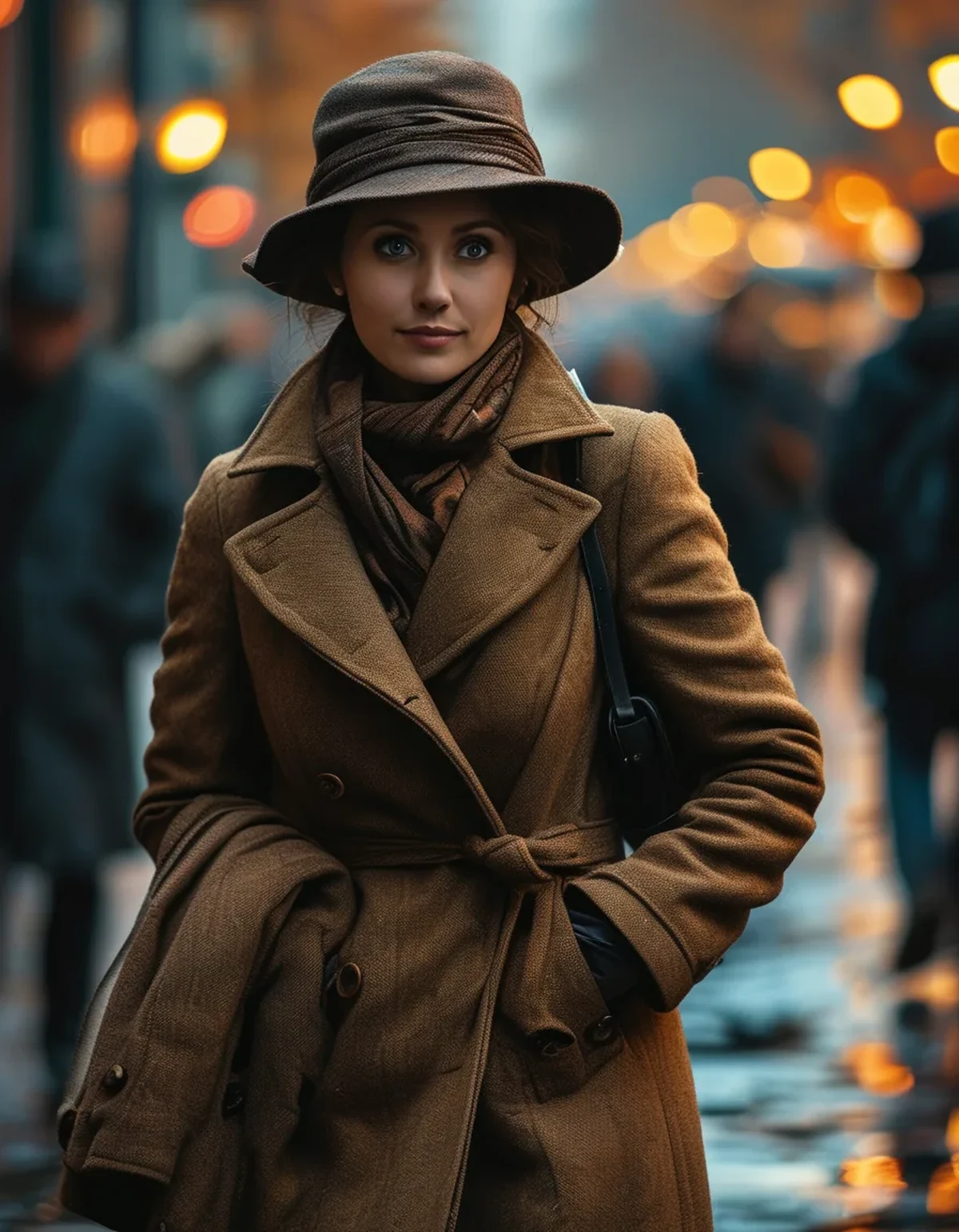
One warm layer that belongs in the outfit. A structured blazer, a good knit, a leather or suede jacket — something you would happily wear all night and be photographed in. This is the entire strategy.
A base that works alone indoors. Venues are still warm in September, so the layer needs to come off without the outfit falling apart.
Legwear you can change your mind about. Sheer tights in a bag take almost no space and change the outfit’s temperature range by several degrees.
Closed shoes rather than sandals from mid-September. Feet get cold before anything else outdoors, and a summer sandal on a 12C pavement is the fastest route to wanting to go home.
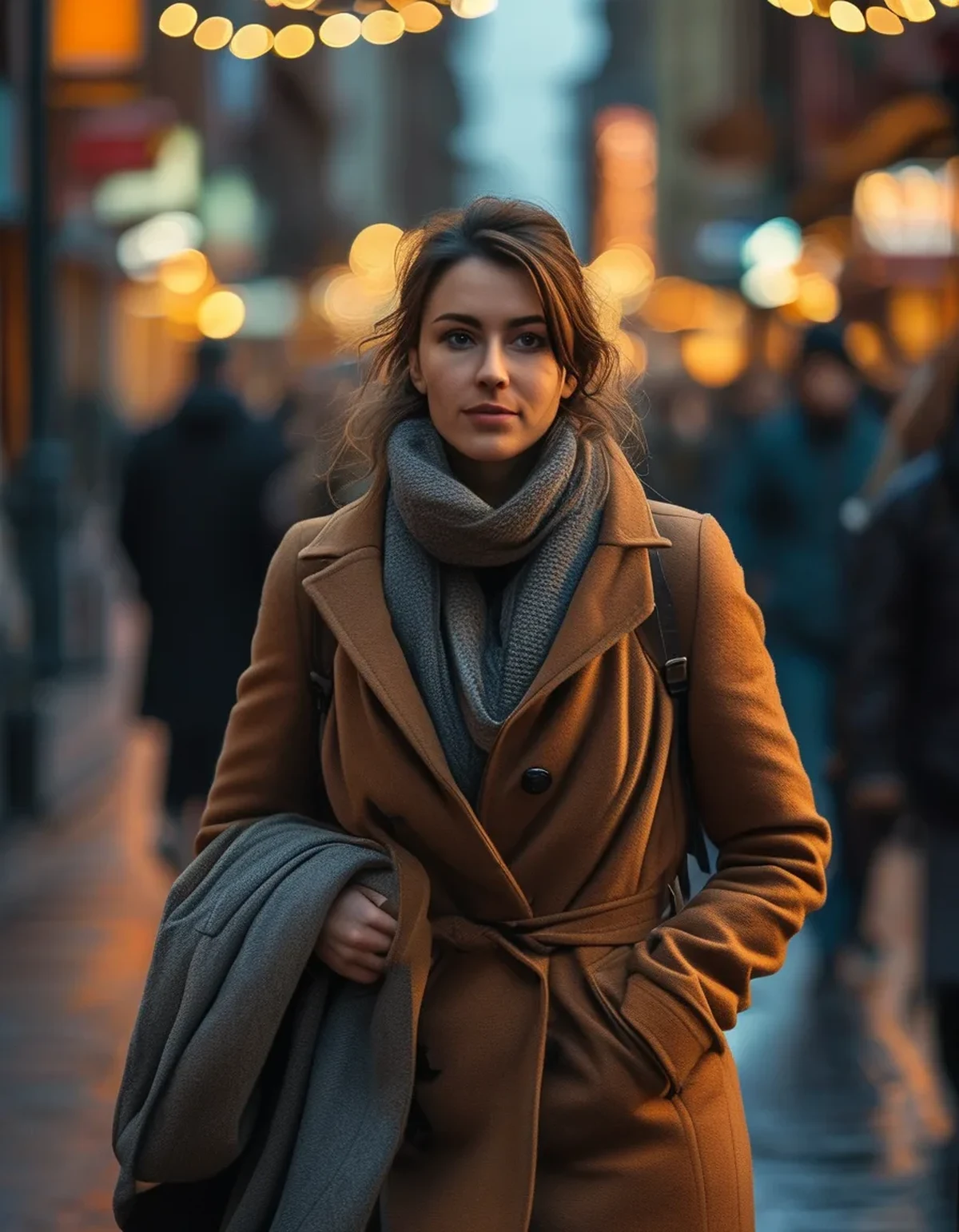
Skip the coat you would have to carry. A coat that gets abandoned on a chair is a coat you do not have at 1am. If you bring outerwear, it should be light enough to keep on your person all night.
Small bag, but big enough for the tights. The bag is the constraint that determines whether the backup plan actually exists.
What nobody tells you about early autumn nights out
Fabric matters more than layer count. One wool knit outperforms two thin synthetic layers by a wide margin. Wool retains warmth when slightly damp; most going-out fabrics do not.
Photos look different in autumn light. Venues turn on warmer lighting earlier in the evening as it gets dark sooner, which shifts how colours read. Cool-toned outfits that photographed well in summer can look washed out under warm autumn interior lighting.
Your feet swell more on a cool night than a warm one. Counterintuitive, but standing still in cool weather causes more fluid pooling than walking in warm weather. Shoes that were fine in July can be tight by 11pm in October.
The taxi wait is the design constraint. Almost every uncomfortable autumn night out comes down to fifteen minutes standing outside at the end. Dressing for that fifteen minutes rather than for the venue solves most of it.
A thin scarf is the highest-value item you can carry. It weighs nothing, packs into a small bag, and covering the neck makes a genuine difference to how cold you feel.
And the one people learn the hard way: the group sets the pace. If one person is cold, the night ends early. Being the person with the extra layer changes the whole evening more often than it should.
FAQ: Autumn Night Out Questions, Answered
Are tights back in season yet?
Sheer tights work from around mid-September in most places, and opaque from October. The transition point is roughly when evening temperatures reliably drop below 15C.
What about a leather jacket over a dress?
It is the classic transition combination for a reason — enough warmth for the walk, structured enough to look intentional indoors, and it does not need to be taken off. It stops working below about 10C without a knit underneath.
How do I stop carrying a coat around all night?
Either wear something warm enough that you do not need one, or choose a coat light enough to fold into a bag. Cloakrooms are the third answer and the most reliable when available.
TL;DR:
- Clear September nights drop 8-10C between 7pm and midnight — the 5pm forecast tells you nothing.
- Build around one warm layer you actually want to wear all night, not a coat you will abandon.
- Sheer tights in the bag are the cheapest several degrees available.
- Closed shoes from mid-September; feet get cold first and swell more in the cool.
- Dress for the fifteen minutes waiting for a taxi, because that is what determines how the night ends.
Alcohol makes you feel warmer while you lose heat faster, which is exactly why the plan has to be made before you go out.
Keep Reading
This article is for general informational and styling purposes only. Fit, sizing, and product availability may vary.